
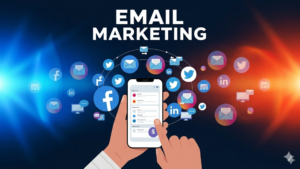
In an era dominated by algorithm-driven platforms, fleeting social media trends, and ever-evolving digital ecosystems, email marketing continues to stand as one of the most resilient and consistently effective communication channels. While many marketers pursue visibility through paid advertising and viral content, email remains a stable, direct, and highly personalized medium that fosters meaningful relationships between brands and their audiences.
Far from being outdated, email marketing has undergone a remarkable transformation. It has evolved from simple mass messaging into a sophisticated, data-driven ecosystem powered by automation, behavioral analytics, and artificial intelligence. Today, it enables brands not just to communicate, but to engage, nurture, and convert audiences through highly tailored experiences.
What is Email Marketing?
Email marketing is a precision-oriented digital strategy that involves delivering targeted messages to a carefully curated list of subscribers. Unlike traditional advertising methods that rely on broad outreach, email marketing emphasizes relevance, personalization, and timing.
At its core, email marketing is about delivering the right message to the right person at the right time. Whether it’s a welcome email for a new subscriber, a personalized product recommendation, or a reminder for an abandoned cart, each interaction is strategically designed to align with the recipient’s preferences, behaviors, and stage in the customer journey.
This level of specificity makes email marketing one of the most effective methods for building trust, enhancing user experience, and driving measurable business outcomes.
Core Pillars of Effective Email Marketing
1. Audience Segmentation
Segmentation is the foundation of successful email marketing. It transforms generic communication into highly personalized messaging that resonates with distinct audience groups.
Rather than sending the same email to an entire list, marketers segment subscribers based on criteria such as demographics, geographic location, purchase behavior, engagement history, and interests. This enables the delivery of tailored content that feels relevant and valuable to each recipient.
For instance, a returning customer may receive product recommendations based on previous purchases, while a new subscriber might enter an onboarding sequence designed to educate and build trust. This targeted approach significantly improves open rates, click-through rates, and overall engagement, while reducing unsubscribe rates.
2. Compelling Copywriting
The effectiveness of any email campaign is fundamentally anchored in the quality and persuasiveness of its copy. Compelling copywriting is not merely about writing well—it is about strategically guiding the reader’s attention, evoking interest, and ultimately driving meaningful action.
Every component of an email, from the subject line to the final call-to-action, must be meticulously engineered. Subject lines serve as the gateway to engagement; they must ignite curiosity, convey urgency, or promise immediate value to encourage opens in an increasingly crowded inbox. Preheader text further reinforces this first impression, subtly influencing the recipient’s decision to engage.
Within the body, clarity and precision are paramount. The content should be concise yet impactful, delivering value without overwhelming the reader. Effective email copy leverages persuasive language, emotional triggers, and storytelling techniques to create a sense of relevance and connection.
Rather than adopting a purely sales-driven tone, high-performing email copy focuses on the audience’s needs, challenges, and aspirations. It positions the company as both a problem-solver and a trusted advisor, articulating a compelling value proposition that resonates on both rational and emotional levels. When executed effectively, compelling copywriting transforms emails from mere messages into meaningful experiences that inspire action.
3. Automation and Workflows
Automation represents a transformative force within email marketing, enabling brands to scale communication efforts while preserving a high degree of customization and contextual relevance.
At its core, automation revolves around intelligently designed workflows triggered by specific user behaviors, interactions, or predefined conditions. These workflows facilitate seamless, real-time engagement across the entire customer lifecycle.
Common examples include:
- A welcome sequence initiated immediately after a user subscribes
- Cart abandonment reminders that re-engage potential customers
- Post-purchase follow-ups that enhance satisfaction and encourage repeat business
- Re-engagement campaigns targeting inactive subscribers
These automated journeys ensure that communication is not only timely but also highly relevant to the user’s current stage in the customer journey. By delivering the right message at precisely the right moment, automation significantly enhances user experience and increases the likelihood of conversion.
Beyond efficiency, automation also introduces consistency and strategic continuity. It eliminates manual intervention in repetitive tasks while ensuring that no critical touchpoint is overlooked. Consequently, organizations can sustain a continuous, value-driven dialogue with their audience without operational strain.
4. Data-Driven Optimization
One of the most compelling advantages of email marketing lies in its inherent measurability. Unlike many traditional marketing channels, email provides granular, real-time insights that empower marketers to make informed, data-driven decisions.
Key performance indicators (KPIs)—including open rates, click-through rates (CTR), conversion rates, bounce rates, and unsubscribe rates—collectively provide a comprehensive view of campaign performance. These metrics offer valuable insights into audience behavior, content effectiveness, and overall engagement patterns.
However, the true power of these insights lies in their application. By systematically analyzing performance data, marketers can identify strengths, uncover inefficiencies, and implement targeted improvements. This may involve refining subject lines to increase open rates, optimizing content for better readability, or adjusting send times to align with audience behavior.
A/B testing (split testing) plays a pivotal role in this optimization process. By experimenting with variations in subject lines, design elements, messaging, and calls-to-action, marketers can determine—through data—which approaches resonate most effectively with their audience. This methodical, iterative process fosters continuous improvement and drives incremental performance gains.
Ultimately, data-driven optimization transforms email marketing from a static communication tool into a dynamic, evolving strategy—one that continuously adapts, learns, and improves to deliver increasingly impactful results.
Types of Email Marketing Campaigns
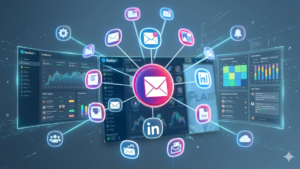
Email marketing encompasses a diverse range of campaign types, each serving a distinct purpose within the customer journey and supporting different stages of audience engagement.
Newsletter Campaigns
Newsletter campaigns are designed to maintain consistent communication with subscribers. They typically include updates, insights, curated content, and company news, helping to nurture relationships and keep the brand top-of-mind.
By focusing on value-driven content rather than direct selling, newsletters play a vital role in building trust and long-term engagement.
Promotional Emails

Promotional emails are focused on driving immediate action, such as making a purchase or signing up for an offer. These campaigns often highlight discounts, limited-time deals, exclusive promotions, and product launches.
When executed effectively, promotional emails create urgency and encourage quick decision-making, directly contributing to conversions and revenue.
Transactional Emails
Transactional emails are triggered by specific user actions and include messages such as order confirmations, shipping updates, receipts, and account notifications.
Although primarily functional, these emails typically achieve high open rates, making them valuable opportunities to reinforce branding, build trust, and incorporate subtle upselling or cross-selling strategies.
Drip Campaigns
Drip campaigns consist of a sequence of automated emails sent over a defined period. They are commonly used for onboarding, education, and lead nurturing.
By delivering content gradually and strategically, drip campaigns guide users through the customer journey, helping them move toward a specific goal such as making a purchase or becoming more engaged with the brand.
Re-engagement Emails
Re-engagement campaigns target inactive or disengaged subscribers with the goal of rekindling interest and restoring interaction.
These emails may include special offers, personalized messages, feedback requests, or reminders of value. They play a critical role in maintaining a healthy email list and improving overall engagement rates.
Benefits of Email Marketing

1. Exceptional Return on Investment (ROI)
Email marketing consistently delivers one of the highest returns on investment among all digital marketing channels. With relatively low costs and strong conversion potential, it remains a highly cost-effective strategy for businesses of all sizes.
2. Direct and Personalized Communication
Unlike social media platforms, where algorithms control visibility, email provides a direct and uninterrupted communication channel. Messages are delivered straight to the user’s inbox, enabling highly personalized interactions based on user behavior and preferences.
3. Enhanced Customer Retention
Long-term business success depends on strong customer relationships. Email marketing supports retention by maintaining consistent communication, delivering ongoing value, and keeping customers engaged over time.
4. Measurable and Scalable Performance
Every element of an email campaign can be tracked and analyzed. This level of transparency enables data-driven decision-making and allows businesses to scale their marketing efforts efficiently as they grow.
Best Practices for Success
To maximize effectiveness, email marketing must be approached strategically, with a strong focus on user experience and value delivery.
Craft Engaging Subject Lines
The subject line creates the first impression and heavily influences open rates. It should be concise, compelling, and value-driven—designed to spark curiosity or highlight immediate benefit.
Optimize for Mobile Devices
With a significant portion of users accessing emails on mobile devices, responsive design is essential. Emails should be visually appealing, fast-loading, and easy to read across all screen sizes.
Maintain Consistency
Consistency builds familiarity and trust. Establishing a regular sending schedule helps maintain engagement without overwhelming the audience.
Prioritize Value Over Promotion
Effective email marketing prioritizes delivering value over constant selling. Educational content, practical tips, and meaningful insights help build credibility and strengthen audience relationships.
Leverage A/B Testing
A/B testing is essential for continuous improvement. By testing variations in subject lines, layouts, content, and calls-to-action, marketers can identify what resonates most with their audience and optimize performance over time.
The Future of Email Marketing
The future trajectory of email marketing is being dynamically reshaped by rapid advancements in artificial intelligence, machine learning, and predictive analytics. These transformative technologies are unlocking unprecedented levels of precision, operational efficiency, and individualized engagement—elevating email into an intelligent, self-optimizing communication ecosystem.
Hyper-Personalization
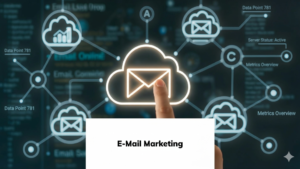
Email marketing is advancing toward a new paradigm of hyper-personalization, where communication transcends traditional segmentation and becomes uniquely tailored to each individual recipient.
By harnessing real-time behavioral signals, preference mapping, and interactional data, brands can orchestrate deeply contextualized experiences. This granular level of personalization ensures that every message aligns with the recipient’s intent, thereby amplifying engagement, reinforcing emotional connection, and significantly enhancing conversion potential.
Dynamic Content
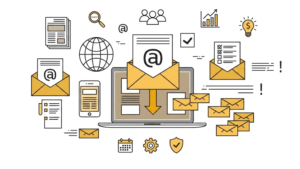
Dynamic content is revolutionizing the structural framework of email communication. Rather than relying on static messaging, modern emails are capable of adapting fluidly in response to user-specific data points such as location, device type, browsing behavior, and temporal context.
This adaptive capability allows a single email to deliver multiple personalized experiences, ensuring that content remains situationally relevant and context-aware. As a result, communication becomes more immersive, responsive, and aligned with real-time user expectations.
Predictive Analytics

Predictive analytics introduces a forward-looking, anticipatory dimension to email marketing. Through sophisticated data modeling and pattern recognition, AI-driven systems can forecast user behavior, preferences, and engagement likelihood.
This predictive intelligence empowers marketers to deploy messages at precisely optimized moments, paired with content that resonates most effectively with the recipient. The outcome is a highly intuitive communication strategy that anticipates needs rather than merely reacts to them.
Integration with Omnichannel Strategies
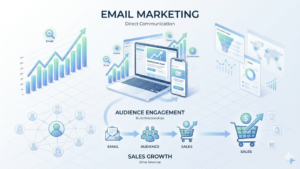
Email marketing has evolved from a standalone channel into an essential component of an integrated omnichannel ecosystem. It now seamlessly converges with platforms such as social media, SMS, mobile applications, and web interfaces to deliver a unified and cohesive customer experience.
This synchronized approach ensures messaging consistency, strengthens brand coherence, and facilitates a frictionless transition across touchpoints. Ultimately, it enhances customer satisfaction, deepens engagement, and fosters long-term loyalty.
Conclusion
Email marketing has transcended its traditional role as a basic communication tool, emerging as a strategic powerhouse that drives personalized engagement, nurtures enduring relationships, and delivers quantifiable business impact.
In a digital environment defined by fragmented attention spans and intensifying competition, email offers a rare and powerful advantage: direct, intentional, and controlled communication. It enables brands to establish meaningful connections with their audience, independent of volatile, algorithm-driven platforms.
By synergizing creative storytelling with data intelligence and automation, organizations can craft compelling, value-centric narratives that resonate deeply and inspire decisive action.
As technological innovation continues to accelerate, the capabilities of email marketing will expand exponentially. Brands that proactively embrace innovation, prioritize individualized experiences, and consistently deliver authentic value will not only capture attention but also cultivate loyalty and achieve sustained, long-term growth.
Author: Muhammed ashiq m